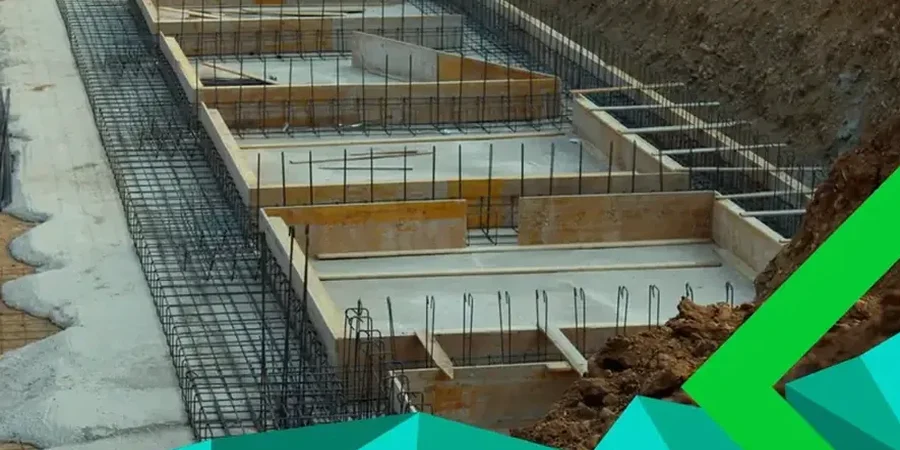
Foundations serve as the critical interface between any structure and the ground beneath it, transferring loads safely from the building to the soil or rock. In Durham, North Carolina, this engineering discipline takes on particular importance due to the region's unique geological profile. The design and construction of foundations here must account for expansive clay soils, weathered rock, and varying water tables that can compromise inadequately planned systems. Homeowners, commercial developers, and infrastructure planners alike depend on proper foundation engineering to prevent settlement, cracking, and structural failure over time.
Durham sits within the Piedmont physiographic province, characterized by its underlying Triassic Basin geology. Much of the city rests on the Durham Triassic Basin, which features sedimentary rock formations including siltstone, sandstone, and shale, often overlain by residual soils derived from the weathering of these parent materials. These soils frequently contain expansive clays, particularly in the northern and eastern parts of the county, which undergo significant volume changes with moisture fluctuations. This shrink-swell behavior presents a primary geotechnical challenge, as it can lead to differential movement that damages slabs, footings, and structural frames. Additionally, the transition zones between residual soils and partially weathered rock, known as saprolite, introduce complexity in bearing capacity evaluation.
Local and national standards govern foundation engineering in Durham. The North Carolina Building Code, which adopts the International Building Code with state-specific amendments, sets minimum requirements for foundation design and construction. Chapter 18 of the IBC, addressing soils and foundations, is enforced alongside the North Carolina Residential Code for one- and two-family dwellings. Geotechnical investigations must comply with these codes and often follow guidelines from the American Society of Civil Engineers. For deeper foundation systems, such as pile foundation design, engineers reference the IBC's deep foundation provisions and industry standards like those from the Deep Foundations Institute. The City of Durham's Development Services Center reviews plans to ensure compliance, and a geotechnical report is typically required for commercial and multi-family projects.
The range of projects requiring engineered foundations in Durham spans residential, commercial, and institutional sectors. Single-family homes on sloping sites or in areas with known expansive soils benefit from tailored foundation solutions, while multi-story apartment buildings and office complexes in downtown Durham demand rigorous analysis of bearing capacity and settlement. Infrastructure projects, including bridges, retaining walls, and utility structures, also rely on robust foundation design to withstand both static and dynamic loads. Pile foundation design becomes essential when near-surface soils lack the strength to support heavy loads, transferring forces to deeper, more competent strata. This is common in parts of Durham where fill materials or soft alluvial deposits overlie bedrock. Similarly, projects near Jordan Lake or the Eno River may encounter loose sediments requiring specialized foundation approaches.
Expansive clay soils are the primary concern across much of Durham, particularly in areas overlying the Triassic Basin. These clays swell when wet and shrink when dry, causing cyclic movement that can crack slabs and footings. Additionally, the presence of saprolite and partially weathered rock creates variable bearing conditions that require careful site-specific investigation to determine appropriate foundation types and depths.
The City of Durham typically mandates a geotechnical investigation for commercial, multi-family, and institutional projects as part of the permitting process. For single-family homes, the North Carolina Residential Code may not always require a formal report, but it is strongly recommended on sites with known expansive soils, steep slopes, or fill materials to avoid future structural issues and ensure code compliance.
Shallow foundations such as slab-on-grade and spread footings are widely used where soils have adequate bearing capacity and low shrink-swell potential. In areas with problematic soils or where loads are heavy, deep foundations including driven piles or drilled shafts are employed to reach more stable strata. The choice depends on the geotechnical report findings and the structural requirements of the project.
Foundation design must meet the North Carolina Building Code, which incorporates the International Building Code with state amendments. These codes specify requirements for soil bearing capacity, settlement limits, waterproofing, and reinforcement. For residential construction, the North Carolina Residential Code provides prescriptive and engineered options, while deeper systems like piles must follow IBC Chapter 18 and referenced industry standards.
We serve projects across Durham and surrounding areas. More info.