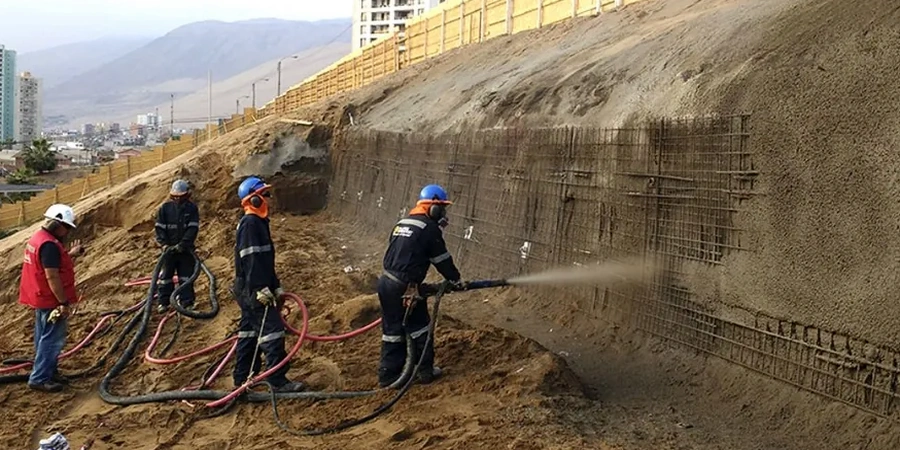
A developer broke ground on a 45-unit townhome cluster off Guess Road last spring, confident the weathered saprolite would hold through excavation. The cut face failed three weeks later, right after a heavy thunderstorm soaked the exposed soil. That repair cost more than the original grading budget. Slope stability analysis is not an optional line item in Durham — the Piedmont’s residual soils, combined with our intense summer rainfall patterns and the rapid pace of infill development around the Eno River corridor, create conditions where even moderate cuts can destabilize without proper evaluation. We run these analyses so our clients avoid exactly that scenario. Understanding how a slope behaves before you commit to a foundation layout saves money, keeps schedules intact, and protects adjacent properties. Our field team has evaluated slopes across Durham County, from steep lots in Trinity Park to commercial pads near Southpoint, and we pair our geotechnical modeling with in-situ permeability testing when groundwater flow emerges as a controlling factor in the stability equation.
Saprolite looks like soil but retains rock fabric — treating it as either one without testing is the fastest way to get a slope stability number wrong in Durham.
Local context
Durham sits at roughly 400 feet elevation on the Piedmont plateau, but the topography is far from flat — the Eno River and its tributaries have carved steep ravines that create slope angles exceeding 30 degrees across much of the county. The 2023 Eno River basin flood study documented over 40 slope-related property damage claims in a single wet season, most of them on lots developed between 1995 and 2010 when geotechnical review standards were less rigorous. Rain is the primary trigger here: Durham averages 46 inches of precipitation annually, and a single tropical remnant system can drop 6 inches in 24 hours, fully saturating the shallow colluvium layer that mantles many slopes. When pore pressure spikes, apparent cohesion drops and previously stable slopes start moving. We have seen slide planes develop at the saprolite-bedrock contact where water accumulates, a failure mechanism that standard desktop studies miss unless someone puts a drill rig on the slope and samples the interface. The repair cost for a failed slope on a developed lot routinely exceeds US$50,000 — and that is before you deal with the neighbor whose yard just slid into yours.
Quick answers
Does every sloped lot in Durham require a stability analysis for a building permit?
Not every lot, but the threshold is lower than most people expect. Durham City-County Inspections typically triggers a geotechnical review when the natural grade exceeds 15% or when proposed cuts and fills exceed 5 feet in height. The planning department may also require it for any site within the Eno River or Little Creek watershed overlay districts. We recommend checking with your civil engineer early — we can often provide a preliminary screening opinion before you spend money on a full analysis.
How long does a slope stability study take from start to finish?
For a typical single-family residential lot, expect 3 to 4 weeks. Week one is drilling and sampling; weeks two and three are laboratory testing — the triaxial suite needs time for consolidation and shear phases. Week four is modeling and report preparation. Commercial projects with deeper failure surfaces or multiple cross-sections may run 5 to 6 weeks. We can expedite the lab phase for an additional fee if your permit deadline is tight.
What does slope stability analysis cost for a project in Durham?
Residential lot analyses typically range from US$1,270 to US$2,300 depending on access and the number of cross-sections required. Commercial site evaluations with deeper borings and multiple slope profiles generally run US$2,500 to US$4,460. The final number depends on drilling depth, laboratory testing scope, and report complexity — we provide a fixed-fee proposal after reviewing your site plan and topography.
What is the biggest mistake you see on sloped sites in the Durham area?
Undercutting the slope toe during basement excavation without temporary shoring. Saprolite stands near-vertical when dry but loses strength rapidly when saturated. A contractor will open a 12-foot cut for a walkout basement, a thunderstorm hits overnight, and the face slumps into the excavation by morning. We have responded to at least half a dozen of these incidents in the past three years across Durham County. The fix is benching and drainage, but prevention costs a fraction of the repair.