Together, we solve the challenges of tomorrow.
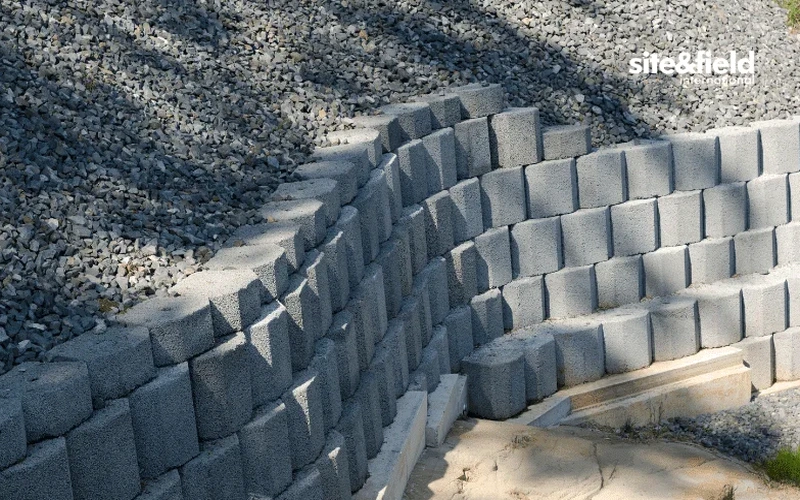
LEARN MORE →In the varied terrain of Durham, North Carolina, the stability of slopes and the integrity of retaining structures are not just engineering concerns—they are essential safeguards for property, infrastructure, and public safety. The Slopes & Walls category encompasses a comprehensive suite of geotechnical services aimed at analyzing, designing, and reinforcing earth retention systems. From natural hillsides to man-made cuts and fills, this discipline addresses the complex interactions between soil, rock, water, and structural elements to prevent landslides, erosion, and wall failures. As Durham experiences continued urban expansion and infill development, the demand for reliable slope stability analysis and durable wall solutions has grown significantly across residential, commercial, and municipal projects.
Durham's geological setting is characterized by the Piedmont physiographic province, where deep residual soils derived from weathered igneous and metamorphic bedrock dominate the subsurface. These silty and clayey soils, often classified as ML, CL, or MH under the Unified Soil Classification System, can lose significant strength when saturated. The region's humid subtropical climate, with its intense rainfall events and occasional tropical storm remnants, frequently triggers shallow slope failures and increases lateral earth pressures behind retaining walls. Understanding these local conditions is critical, as the presence of saprolite—a highly weathered rock that retains the original structure but behaves like soil—creates transitional zones that demand specialized investigation and design approaches unique to the Piedmont.
Geotechnical practice in Durham must adhere to the standards set forth in the North Carolina Building Code, which adopts and amends the International Building Code (IBC). Chapter 18 of the IBC governs soils and foundations, while Chapter 16 addresses structural design loads, including lateral earth pressures. For slope evaluations, the code references the allowable bearing pressures and safety factors outlined in consensus documents like those from the American Society of Civil Engineers (ASCE). Specifically, retaining walls over a certain height require engineered designs sealed by a licensed professional engineer, with minimum factors of safety against sliding and overturning typically set at 1.5. Additionally, the North Carolina Department of Environmental Quality (NCDEQ) regulates erosion and sediment control during construction, making proper slope stabilization and wall drainage integral to permit compliance.
The types of projects that require these services are diverse and reflect Durham's dynamic landscape. Steeply graded residential lots in neighborhoods like Trinity Park or new subdivisions near Jordan Lake often need retaining wall design to create usable terraces and prevent downhill encroachment. Commercial developments along corridors such as US 15-501 or the revitalized downtown district frequently involve deep excavations supported by anchored systems, where active/passive anchor design provides lateral restraint for soldier pile or sheet pile walls. Infrastructure projects, including roadway widening along I-85 or greenway expansions along Ellerbe Creek, depend on detailed slope stability analysis to assess cut-slope safety and design appropriate reinforcement measures. Even historic preservation efforts, such as stabilizing the grounds around older structures, call upon these specialized geotechnical services to protect cultural resources without compromising modern safety standards. In every case, a thorough understanding of Durham's subsurface conditions and applicable regulations ensures that solutions are both effective and enduring.
Homeowners and developers should look for tension cracks in the ground, especially near the top of slopes, leaning trees or utility poles, sudden appearance of springs or wet spots, and bulging at the toe of a slope. Inside structures, sticking doors or windows and new cracks in foundations or walls can also indicate slope movement. Given Durham's clay-rich residual soils, these signs often appear after prolonged rainfall.
Active anchors are post-tensioned to apply a load to the wall and the retained soil mass, actively restraining movement from the moment of installation. Passive anchors, such as soil nails or rock dowels, are not tensioned; they develop their resisting force only as the ground deforms and loads the reinforcement. The choice depends on allowable wall deflections, soil conditions, and project constraints.
Under the North Carolina Building Code, any retaining wall supporting a surcharge or exceeding four feet in height measured from the bottom of the footing to the top of the wall typically requires a building permit and must be designed by a licensed professional engineer. Walls under this threshold but near structures or property lines may still necessitate engineered evaluation to ensure stability and proper drainage.
Saprolite, a highly weathered rock that retains the texture of the parent material but exhibits soil-like strength characteristics, creates a transitional zone between soil and competent bedrock. Its behavior can be unpredictable, with relic joints and varying degrees of weathering. Design must account for its potential to act as a weak layer in slopes or a variable bearing stratum for walls, often requiring deeper borings and conservative design parameters.
We serve projects across Durham and surrounding areas. More info.