← Home · Roadway

Flexible Pavement Design Testing in Durham, NC

Together, we solve the challenges of tomorrow.

LEARN MORE →

Flexible pavement design in Durham has to account for the Piedmont residual soils that dominate this part of North Carolina. These are not your typical sedimentary deposits. They are silty sands and sandy silts formed from weathered bedrock, and their behavior under repeated traffic loads changes with moisture in ways that generic design tables miss. NCDOT specs reference AASHTO 93 for structural design, but the material inputs need local calibration. Our lab runs CBR and resilient modulus on Shelby series samples from sites across Durham County to feed those design models with real numbers. The I-85 widening through the northern corridor taught us how much variability sits within a single project alignment. We complement pavement work with Proctor tests to nail down optimum moisture for subgrade compaction and grain size analysis to classify the fines content that controls drainage behavior.

Piedmont residual soils don't fail by punching shear alone. They soften with moisture migration, and that stiffness loss shows up in the resilient modulus long before rutting starts.

Methodology and scope

A job we ran last fall on a warehouse pad off TW Alexander Drive showed the typical challenge. The site had Herndon silt loam at the surface, then transitioned into partially weathered diorite at about four feet. The owner wanted a flexible section with asphalt over aggregate base, but the stiffness contrast between the upper subgrade and the weathered rock was going to create reflective issues after maybe three freeze-thaw cycles. We pulled Shelby tubes at five stations, ran resilient modulus at three deviator stress levels, and built a layer coefficient profile that the pavement designer used to adjust the base thickness from six to nine inches across the transition zone. That is the difference between a lot that lasts eight years and one that lasts fifteen. The CBR road testing we do gives the soaked strength values that AASHTO 93 plugs into the structural number equation, and running it on both the natural subgrade and the compacted fill lets us flag weak spots before the paver ever shows up.
Flexible Pavement Design Testing in Durham, NC
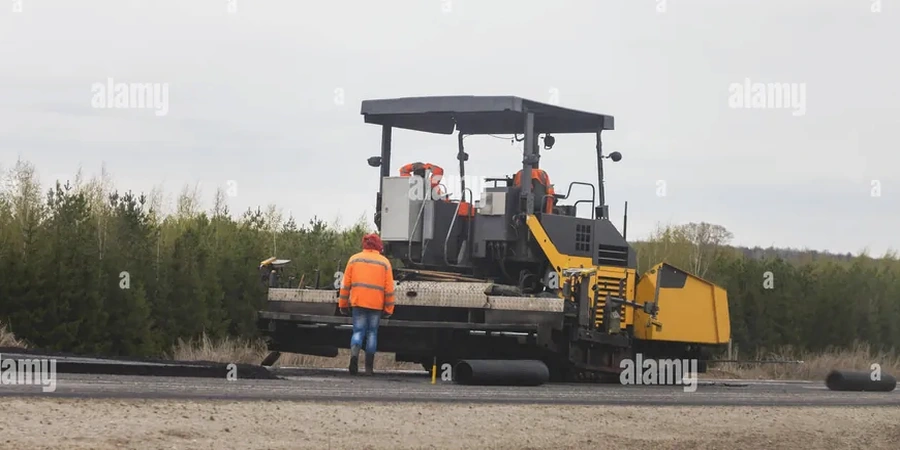
Technical reference image — Durham

Local considerations

Downtown Durham near the old tobacco warehouses sits on fill that was placed a century ago with zero compaction control. Compare that to the newer subdivisions out near Southpoint, where cut sections expose competent weathered rock and the subgrade support is dramatically better. The same flexible pavement section would perform completely differently in both locations. A design that works on the Cecil sandy loam of Hope Valley might be under-designed by thirty percent on the alluvial silts along Ellerbe Creek. That is why we insist on running soaked CBR and moisture-density curves for each distinct soil unit across a project, not just one composite sample. In the Piedmont, summer thunderstorms saturate the upper two feet fast, and a pavement that loses subgrade modulus when wet will rut within two seasons. Getting the drainage coefficient right in the AASHTO equation depends on knowing exactly how much fines you are dealing with. We also pull Atterberg limits data on every sample because the PI tells you more about long-term moisture sensitivity than any single strength test.

Need a geotechnical assessment?

Reply within 24h.

Email: contact@geotechnical-engineering.vip

Watch the video

Reference parameters

ParameterTypical value
Resilient Modulus (Mr)5,000 – 18,000 psi (Durham silts)
CBR soaked (subgrade)3 – 8 (typical Piedmont)
Optimum moisture (Proctor)12 – 22% (varies by fines)
Liquid Limit (Atterberg)28 – 52 (Herndon series)
Plasticity Index6 – 22
Percent passing #200 sieve35 – 75%
AASHTO soil classificationA-4 to A-7-6

Related services

01

Resilient Modulus Testing

Mr determination on compacted specimens at multiple deviator stresses, following AASHTO T 307. We test both natural subgrade and chemically stabilized soils. Results feed directly into the structural number calculation.

02

CBR and Proctor Suite

Soaked CBR per AASHTO T 193 paired with standard or modified Proctor. We run pairs on each soil unit so the design engineer has both strength at optimum and sensitivity to moisture variation.

03

Subgrade Classification Package

Combined grain size, Atterberg limits, and moisture-density relationship. Classifies soil per AASHTO M 145 and flags frost-susceptible silts that need special drainage consideration in Durham's freeze-thaw cycles.

Relevant standards

AASHTO T 307 (Resilient Modulus), AASHTO T 193 (CBR), ASTM D698 / AASHTO T 99 (Proctor), ASTM D4318 (Atterberg Limits), NCDOT Standard Specifications for Roads and Structures

Quick answers

What is the typical structural number range for flexible pavements in Durham?

Most local roads and light commercial parking lots in Durham fall between SN 3.0 and 5.0. Higher-traffic corridors like US 15-501 or arterial connectors around Duke University can push to SN 5.5 or above. The number depends on traffic loading, subgrade CBR, and the drainage coefficient we calculate from grain size data.

How much does flexible pavement design testing cost for a typical Durham project?

A full testing package including CBR, Proctor, grain size, Atterberg limits, and resilient modulus on two to four soil units generally runs between US$1,560 and US$5,190. The range depends on the number of Shelby tube samples and whether we run Mr at three or five deviator stress levels. We provide a fixed quote after reviewing the geotechnical boring logs and project plans.

How long does the lab work take from sample drop-off to report?

Standard CBR and Proctor suites take five to seven business days. Resilient modulus testing adds three to four days because of specimen conditioning requirements. We can expedite to four business days for the full package when the paving schedule is tight, which happens often during Durham's summer construction season.

Do NCDOT projects require resilient modulus or is CBR sufficient?

NCDOT still accepts CBR-based design for most standard roadway projects, but resilient modulus is increasingly required on design-build contracts and interstate work. We recommend running both in parallel on the same samples. The Mr data gives you a better picture of seasonal stiffness variation, and having it in the file avoids redesign delays if the agency requests it later.
Location and service area

We serve projects across Durham and surrounding areas.

View larger map