← Home · Laboratory

Proctor Testing Durham – Standard & Modified Compaction for Local Soils

Together, we solve the challenges of tomorrow.

LEARN MORE →

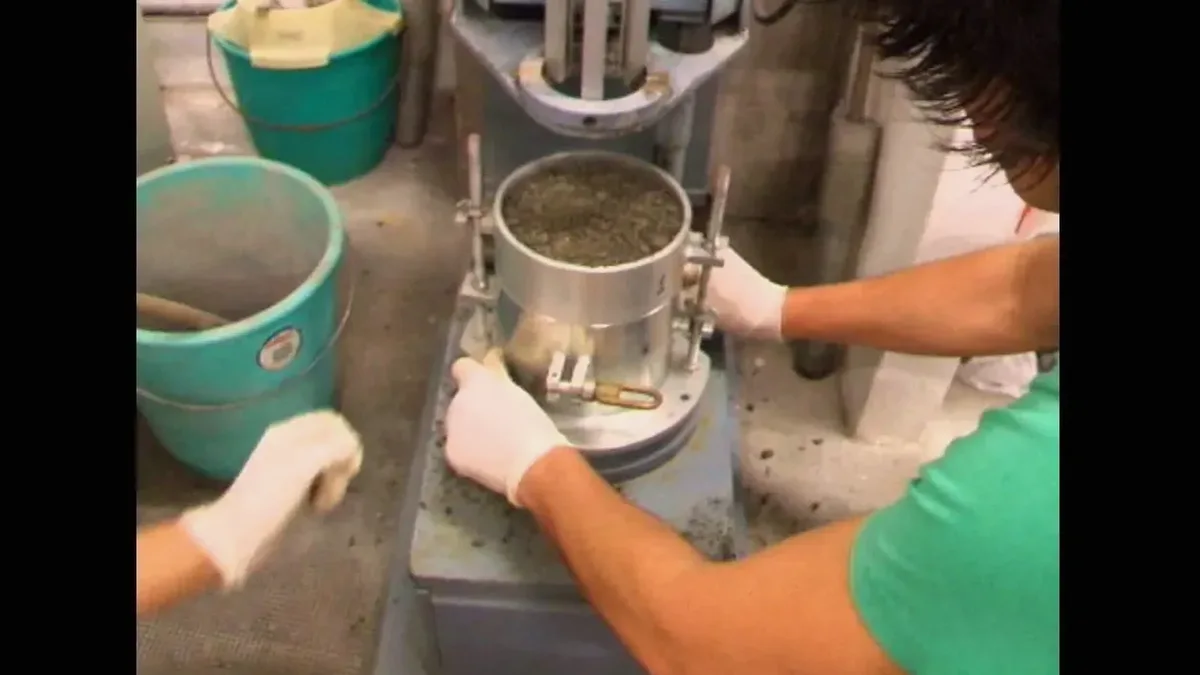
A crew we worked with near the American Tobacco District was placing structural fill around a new four-story mixed-use building. They hit a red flag when the fill wouldn’t reach 95 percent of the lab maximum, even with heavy vibratory rollers. Turns out they were using a moisture–density curve from a borrow pit two counties over, never run on the actual Triassic siltstone-derived soil on site. Durham’s geology doesn’t forgive that kind of shortcut. The Proctor test — whether Standard or Modified — pins down the exact relationship between moisture and dry density for the material you’re compacting. Without it, you’re guessing on lift thickness, roller passes, and moisture conditioning. We run both ASTM D698 and D1557 in our accredited lab, so contractors and geotechnical engineers get a curve that reflects the real site conditions, not a textbook assumption.

A Proctor curve isn't just a number — it's the compaction roadmap for the entire earthwork phase in Durham's variable residual soils.

Methodology and scope

One thing we’ve learned from years of testing across the Triangle is that Durham’s saprolitic soils behave differently than the coastal plain sands you see east of I-95. The fines content in our weathered igneous and metamorphic rock can shift the optimum moisture point by three to five percent across a single cut. That means a single Proctor curve might not represent the full variability of the site. We often recommend running companion tests with a sand cone density test to correlate lab values with field compaction results, especially when the fill material transitions from a micaceous sandy silt to a lean clay within the same lift. Our lab uses both the 4-inch and 6-inch molds depending on gradation, and we report zero air voids curves alongside the compaction data so the project engineer can spot iron-rich or high-specific-gravity anomalies that are common in the Durham Triassic basin.
Proctor Testing Durham – Standard & Modified Compaction for Local Soils
Technical reference image — Durham

Local considerations

The most common mistake we see on Durham jobs is assuming that a higher compactive effort always solves the problem. When a Modified Proctor value is used as the benchmark without checking whether the on-site equipment can actually deliver that energy, the result is a spec that looks good on paper but fails every field density test. We’ve watched projects on the silty sands of the Eno River valley stall for weeks because the contractor couldn’t meet 98 percent of a Modified maximum that was physically unattainable at the available moisture. The fix isn’t more roller passes — it’s running the right test, setting a realistic target, and understanding that some of our residual soils lose strength when over-compacted on the wet side of optimum. A Proctor curve isn’t just a number; it’s the compaction roadmap for the entire earthwork phase.

Need a geotechnical assessment?

Reply within 24h.

Email: contact@geotechnical-engineering.vip

Reference parameters

ParameterTypical value
Standard Test MethodASTM D698 (Standard Proctor), ASTM D1557 (Modified Proctor)
Mold Sizes Available4-inch diameter (1/30 ft³), 6-inch diameter (1/13.33 ft³)
Compactive Effort – Standard12,400 ft-lbf/ft³ (5.5 lb hammer, 12 in drop, 3 layers x 25 blows)
Compactive Effort – Modified56,000 ft-lbf/ft³ (10 lb hammer, 18 in drop, 5 layers x 25 blows)
Typical Soil Types TestedSilty sands (SM), low-plasticity silts (ML), clayey sands (SC), saprolitic residual soils
Reported ValuesMaximum dry density (pcf or kN/m³), optimum moisture content (%), zero air voids curve
Oversize CorrectionASTM D4718 for plus No. 4 retained; coordination with grain-size analysis recommended
Lab AccreditationISO/IEC 17025 accredited, compliant with NCDOT and AMRL proficiency requirements

Related services

01

Standard & Modified Proctor Testing

We run ASTM D698 and D1557 on bulk samples delivered to our lab, using the mold size and energy level appropriate for the project spec. Curves include ZAV reference and oversize corrections when needed.

02

One-Point Proctor & Rapid Verification

When fill material changes during a cut-to-fill operation, we run one-point Proctor tests against an established family-of-curves to confirm maximum density and optimum moisture within 24 hours.

03

Field Density Correlation & QA/QC Support

We pair lab Proctor values with nuclear gauge or sand cone field density results, helping contractors adjust moisture conditioning and roller patterns to hit the target compaction percentage.

Relevant standards

ASTM D698 – Standard Test Methods for Laboratory Compaction Characteristics of Soil Using Standard Effort, ASTM D1557 – Standard Test Methods for Laboratory Compaction Characteristics of Soil Using Modified Effort, ASTM D4718 – Standard Practice for Correction of Unit Weight and Water Content for Soils Containing Oversize Particles, ASTM D2487 – Standard Practice for Classification of Soils for Engineering Purposes (Unified Soil Classification System), NCDOT Standard Specifications for Roads and Structures, Section 1016

Quick answers

What's the difference between Standard and Modified Proctor, and which one should I specify for a Durham building pad?

Standard Proctor (ASTM D698) uses a 5.5 lb hammer dropped 12 inches and is typical for low-rise building pads, landscape fills, and utility trenches where compaction equipment is lighter. Modified Proctor (ASTM D1557) uses a 10 lb hammer dropped 18 inches and replicates the higher energy of modern vibratory rollers. For mid-rise and commercial building pads in Durham, most geotechnical reports specify Modified Proctor at 95 to 98 percent relative compaction, but the choice must match the roller fleet available to the contractor.

How much does a Proctor test cost in Durham?

A single-point Standard or Modified Proctor test typically runs between US$100 and US$220, depending on whether we need to pre-dry the sample, run a companion grain-size analysis, or apply oversize corrections. A full four-point curve with classification falls toward the upper end of that range. We provide a firm quote once we know the number of material types on the project.

How long does it take to get Proctor results?

Standard turnaround is 2 to 3 working days from sample receipt for a full multi-point curve. If the project is in active earthwork and you need a one-point check against an existing curve, we can often report within 24 hours. Expedited same-day service is available with advance coordination.

Why do Durham soils sometimes show optimum moisture values higher than expected?

Many of Durham's residual soils from the Triassic basin contain fine-grained weathered mica and iron oxides that hold capillary moisture. These minerals increase the specific gravity and the water-holding capacity of what visually looks like a sandy silt. A standard curve from a borrow pit in the Coastal Plain can show optimum moisture around 10–12 percent, while a Durham saprolite might need 15–18 percent to reach maximum density. Testing the actual site material is the only way to get a reliable target.
Location and service area

We serve projects across Durham and surrounding areas. More info.

View larger map