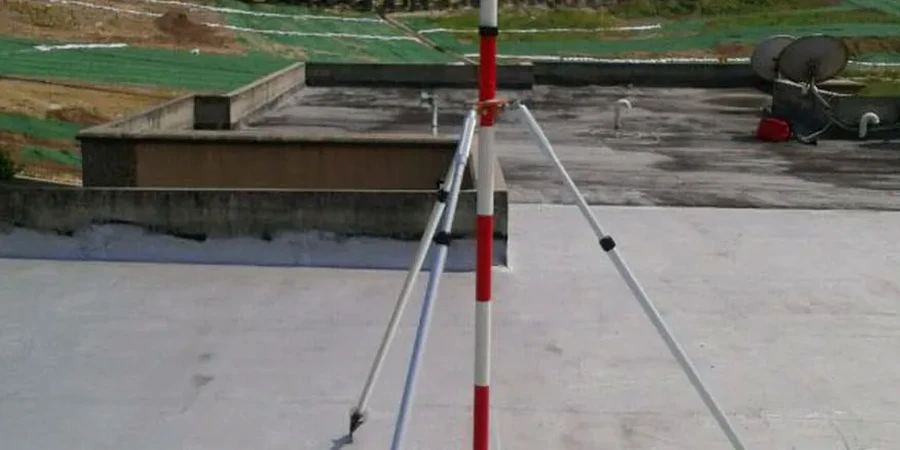
IBC Section 3304 requires monitoring for any excavation deeper than 20 feet, but in Durham the real trigger is often shallower—where fully decomposed Piedmont granite transitions to saprolite, the behavior changes within a single lift. Our team has tracked inclinometer drift on Ninth Street and vibration thresholds near Duke University labs where 0.12 in/s PPV was the hard ceiling. We run a program that layers automated total stations with manual standpipe readouts because one dataset is never enough when weathered rock is the substrate. This applies whether the cut is for a parking deck basement or a stormwater vault behind a renovated tobacco warehouse. Deep excavation design often dictates the instrumentation layout, and we integrate that with the shoring engineer’s submittals before the first bucket enters the ground.
In Durham's Piedmont residual soils, the difference between saprolite and weathered rock is often just 18 vertical inches—and that's exactly where most excavation monitoring plans fail to put an inclinometer.
Quick answers
What triggers an excavation monitoring plan in Durham?
IBC Chapter 33 mandates monitoring for cuts deeper than 20 feet, but the City of Durham's technical review often requires it for any excavation within the zone of influence of an adjacent structure, regardless of depth. If the 1:1.5 influence line from the bottom of your cut intersects a neighboring foundation, expect to submit an instrumentation plan with your building permit.
How much does a typical excavation monitoring program cost in Durham?
For a 2–3 month commercial excavation within the city limits, budget between US$900 and US$2,750 per month depending on the number of monitoring points, the frequency of readings, and whether real-time data telemetry is required. A small residential basement cut with manual readings will fall on the lower end; a multi-level parking garage adjacent to a historic structure with automated total stations will be at the upper end.
How do you handle monitoring when weathered rock is encountered?
Weathered Piedmont rock—what local drillers call partridge—behaves differently than either soil or competent rock. We install inclinometer casing into the rock socket and add a piezometer at the soil-rock interface because that horizon often holds perched water. The monitoring frequency typically increases from weekly to daily for two weeks after the rock excavation begins, then tapers once the rate of movement stabilizes below 0.01 inches per day.
Who receives the monitoring data during the project?
Our standard protocol distributes a weekly PDF report to the GC superintendent, the shoring designer, and the owner's representative. If any instrument exceeds 70% of the pre-set threshold, an automated alert goes out within one hour, and we follow up with a phone call. The full dataset—including time-stamped total station coordinates and piezometer readings—is archived and delivered as a CSV upon project closeout for the permanent record.