← Home · Foundations

Shallow Foundation Design in Durham, NC: Bearing on Piedmont Residual Soils

Together, we solve the challenges of tomorrow.

LEARN MORE →

Durham sits at roughly 400 feet above sea level, on the eastern edge of the Triassic Basin. The subsurface here tells a story of ancient volcanism and millions of years of weathering. Shallow foundation design in this city has to reconcile two very different soil profiles: stiff residual silts from weathered igneous rock, and softer alluvial deposits along the Eno and Neuse river corridors. The 2020 earthquake near Sparta, a 5.1 magnitude event, reminded engineers across North Carolina that the Piedmont is not aseismic. A footing that performs well in saprolite can settle unacceptably if it bridges across a buried diabase dike with a completely different weathering profile. Our work starts with targeted test pits to map the top of the weathered rock surface, which in Durham often undulates dramatically over short distances.

In Durham's Piedmont residual soils, SPT N-values above 30 often mean competent bearing material, but micaceous silts near Falls Lake can break that rule entirely.

Methodology and scope

A shallow foundation design in Durham typically relies on the bearing capacity of partially weathered rock or very stiff silt. The design process begins with correlating SPT N-values from spt drilling to allowable bearing pressures using local experience. In the Piedmont, N-values above 30 in residual soil often indicate competent material for spread footings, but we never rely on SPT alone. We use ASTM D2487 for visual-manual classification and back it up with laboratory grain-size distribution to confirm the silt percentage. When we encounter micaceous silts near Falls Lake, the friction angle can be surprisingly low despite high blow counts. The IBC Chapter 18 provisions require a site-specific bearing capacity analysis that accounts for the variability of these residual profiles. We also run Atterberg limits to screen for potentially expansive fines in the upper weathered zone, a common issue in older Durham neighborhoods like Trinity Park where mature trees have desiccated the clay fraction over decades.
Shallow Foundation Design in Durham, NC: Bearing on Piedmont Residual Soils
Technical reference image — Durham

Local considerations

The most common foundation problem in Durham is differential settlement caused by variable weathering depths. The contact between residual soil and underlying bedrock is rarely flat. A single-family home footprint might have 4 feet of soil on one corner and rock at 18 inches on another. If the footing is designed to a uniform bearing pressure without accounting for this transition, the structure will tilt. We see this regularly in subdivisions built on cut-and-fill lots north of I-85. A secondary risk is perched groundwater in the upper weathered zone during wet winters, which can soften the bearing stratum just enough to trigger settlement. The 1996 remnants of Hurricane Fran demonstrated how quickly saturated Piedmont silts lose strength. For commercial projects, the interaction between shallow footings and adjacent retaining walls demands a combined analysis when the wall is within the footing influence zone.

Need a geotechnical assessment?

Reply within 24h.

Email: contact@geotechnical-engineering.vip

Reference parameters

ParameterTypical value
Typical Design Bearing Pressure (stiff residual silt)2,000 - 4,000 psf
Typical Design Bearing Pressure (weathered rock)6,000 - 12,000 psf
Minimum Footing Depth (frost protection)18 inches per IBC
Allowable Settlement (total)1 inch (25 mm) for spread footings
Allowable Settlement (differential)0.75 inch over 30 ft span
Seismic Site Class (typical residual soil)C or D per ASCE 7-22
Reinforcement Yield Strength (typical)Grade 60 (fy = 60,000 psi)

Related services

01

Bearing Capacity and Settlement Analysis

We calculate allowable bearing pressures for spread footings and mat foundations using Vesic and Meyerhof methods, calibrated against Durham-specific SPT correlations. Settlement predictions use Schmertmann's method for granular residual soils and consolidation theory for the few pockets of alluvial clay in the city.

02

Footing Design on Variable Rock

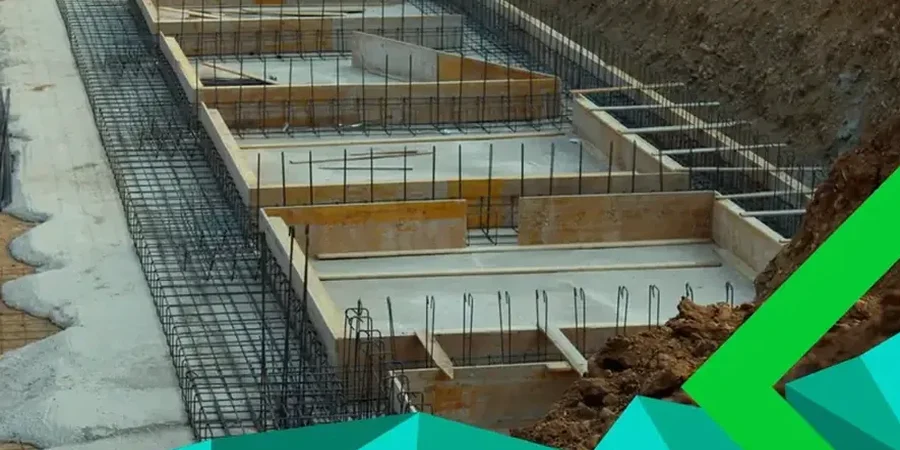
When the rock surface is uneven, we design footings with controlled stiffness to limit differential movement. This includes thickened edges, nominal reinforcement cages, and in some cases a mud mat to bridge small depressions in the weathered rock profile.

Relevant standards

ASCE 7-22 Minimum Design Loads, IBC 2021 Chapter 18 Soils and Foundations, ASTM D1586-18 Standard Penetration Test, ASTM D2487-17 Soil Classification, ACI 318-19 Structural Concrete

Quick answers

What is the typical allowable bearing pressure for a shallow foundation in Durham?

For stiff Piedmont residual silts, we typically recommend 2,000 to 4,000 psf based on conservative SPT correlations and settlement analysis. Where footings bear directly on weathered igneous rock, allowable pressures can reach 6,000 to 12,000 psf. Every site must be verified with borings; we have seen competent-looking soil fail under load because of a thin layer of decomposed mica.

How deep do footings need to be in Durham to comply with frost protection requirements?

The IBC specifies a minimum depth of 18 inches below finished grade for frost protection in North Carolina. In practice, we often go deeper — 24 to 30 inches — to get past the active zone where seasonal moisture changes cause volume fluctuations in the upper silt layer.

What does a shallow foundation design investigation cost for a typical residential lot in Durham?

For a standard single-family home lot with a few test pits or SPT borings, a soil investigation and foundation recommendation letter in Durham runs between US$2,010 and US$3,050. The final cost depends on access, the number of borings, and whether laboratory testing like grain-size analysis or Atterberg limits is needed.

Is seismic design required for shallow foundations in Durham?

Yes. While Durham is not in a high-seismicity zone like California, the IBC and ASCE 7-22 still require seismic considerations. The Sparta 2020 earthquake was felt strongly here. Foundations must be designed for the site class determined from shear wave velocity or SPT data, typically Class C or D. The connection between footing and stem wall must resist the lateral seismic demand.
Location and service area

We serve projects across Durham and surrounding areas.

View larger map